
Expert Services
TR Measurement
Get site safety monitoring right with a reliable tool.
Get site safety monitoring right with a reliable tool.
TR measurement It is a tool widely used in the construction industry to monitor and improve safety on construction sites. But what does TR measurement mean in practice?
TR measurement is an observation-based method that provides an objective assessment of the safety performance of a construction site. TR stands for Safety at Work, Construction.The method is an established practice on Finnish construction sites, as part of both daily safety work and weekly health and safety inspections.
TR measurement It was developed in the 1990s as a tool for assessing workplace safety on construction sites. The assessment focuses on the risks most relevant to workplace safety—such as fall protection, walkways, machinery, electrical safety, and order and cleanliness.
The aim is to get a clear picture of how safety is implemented in everyday work – and to continuously improve it.
The TR measurement looks at the safety of a construction site in six key areas that affect safety: Working methods, Scaffolding, access bridges and ladders, Machinery and equipment, Fall protection, Electricity and lighting, and General order and dust.
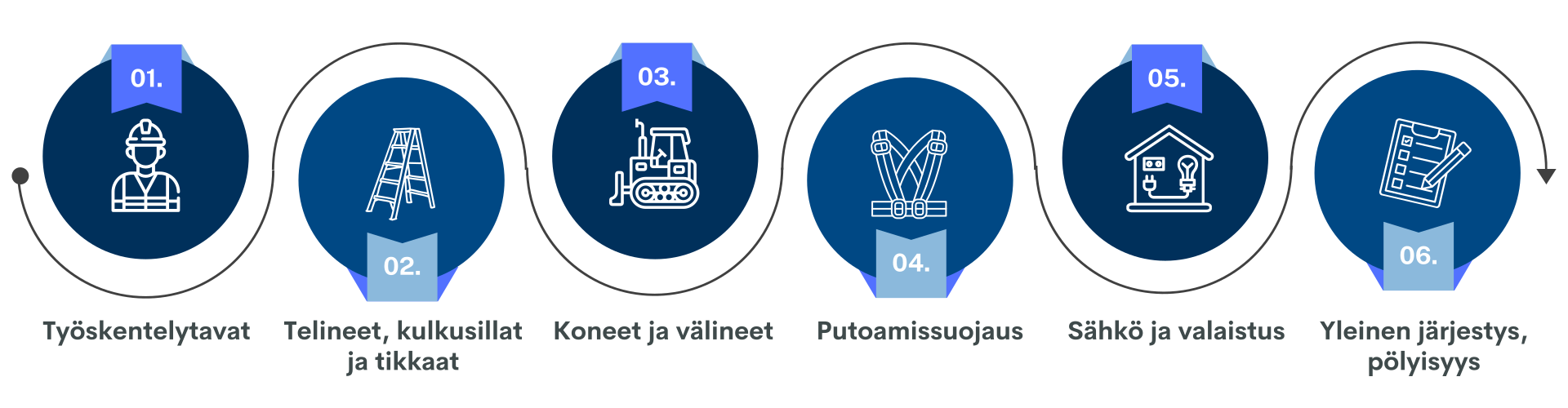

The objectives and benefits of TR measurement go far beyond a simple inspection report:
After the measurement, the results are processed and made available to all staff. This increases transparency and supports a culture of safety.

Unlike a “check-the-box” audit, TR measurement also take partial successes into account. For example, if 8 out of 10 people use appropriate personal protective equipment, the safety index is 80%. A traditional method might assign a score of zero to such a situation.
This makes the observation of safety at work on the site more accurate and leads to practical improvements.


Do you want to improve the safety of your site in a measurable and effective way?
Protect helps you to integrate TR measurement into your daily safety work – from training to practical implementation.
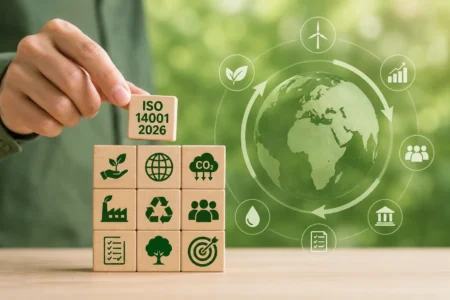
Although the structure of the ISO 14001 standard remains largely unchanged, it places greater emphasis than before on the connection between environmental management and business operations, the operating environment, and taking changing environmental conditions into account.

Fire watch services are a key component of risk management. Protect’s experienced fire watch personnel identify potential hazards in advance and ensure safe working conditions even in demanding environments.

Process safety is a key component of chemical safety. It helps manage risks that are unlikely to occur but could have serious consequences—such as explosions or chemical spills.

The quantity and hazard class of chemicals affect not only classification, but also risk management, documentation requirements, and inspection frequency.